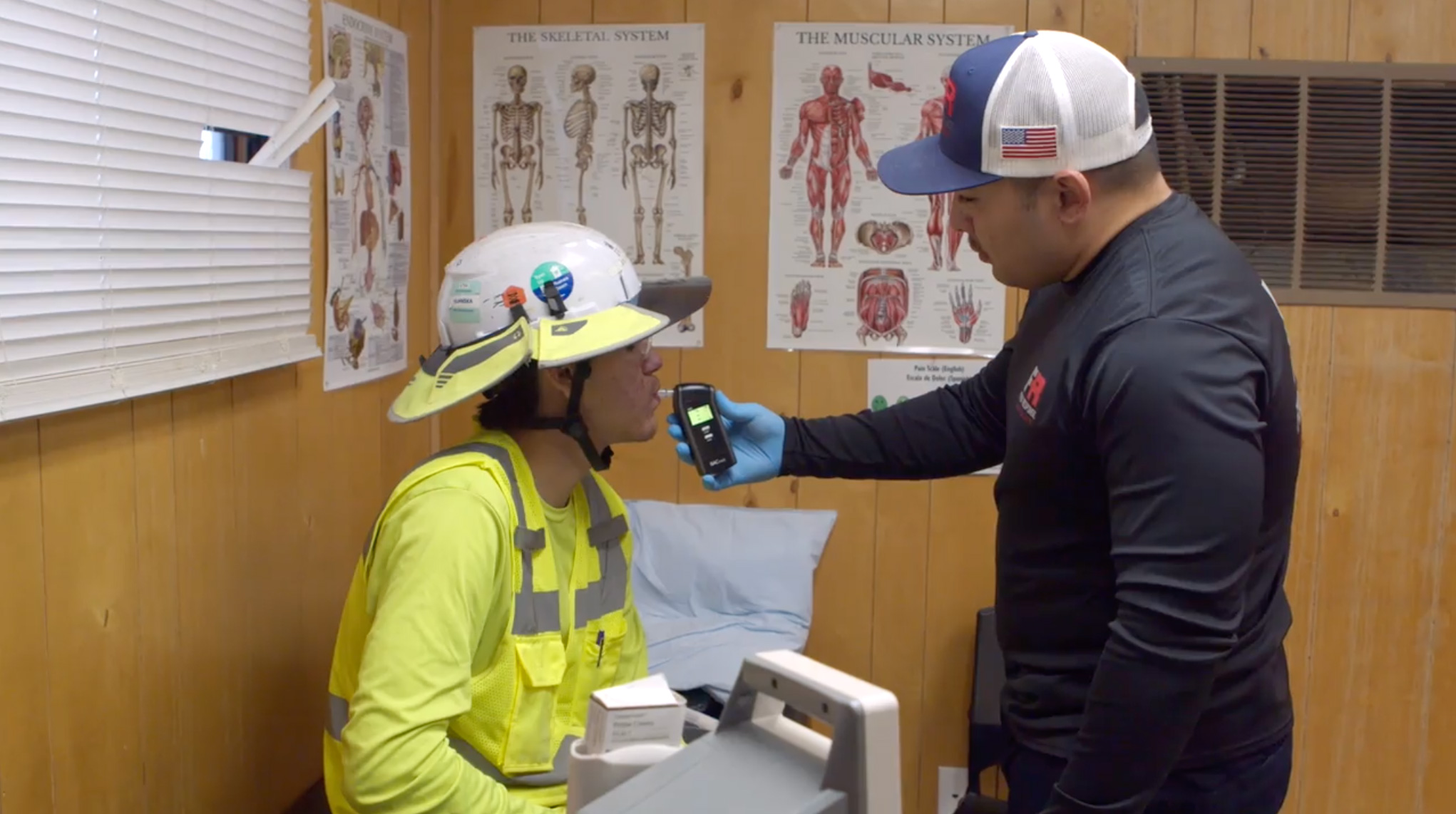
A DOT drug test is federally required under 49 CFR Part 40 for safety-sensitive roles…
First Aid and AED Requirements for Construction Sites
Summary
First aid and AED requirements for construction sites start with OSHA’s 29 CFR 1926.50, which requires a first aid-trained person on site when medical facilities are not reasonably accessible. OSHA does not require AEDs on every site, though many employers add them alongside CPR training on higher-risk projects.
Construction sites have the highest medical emergency risks of any work environment. Falls, electrocutions, crush injuries, heat stroke, and cardiac events can happen without warning, and the minutes before EMS arrives are the ones that matter most. OSHA’s medical services and first aid standard (29 CFR 1926.50) sets the baseline for what every construction site is required to have in place.
Here’s what that looks like in practice.
What OSHA Requires for First Aid on Construction Sites
Under OSHA’s Medical Services and First Aid standard (29 CFR 1926.50), employers must ensure prompt medical attention is available before work begins. Medical personnel must be available for consultation on matters of workplace health, and when medical facilities are not reasonably accessible in terms of time and distance, a person with valid first aid training must be available at the jobsite.
- First aid supplies should be available in weather-resistant containers and inspected regularly.
- An emergency communication plan should be established so workers can quickly contact emergency medical services.
- Eye wash or body flushing facilities should be available where employees may be exposed to corrosive materials.
- Emergency medical procedures should be communicated before work begins.
What Goes in a Construction Site First Aid Kit
The ANSI/ISEA Z308.1 standard provides the baseline requirements for first aid kits. Kits should be scaled to crew size and supplemented based on site-specific standards.
- Gauze pads, including two large pads at least 8×10 inches
- Adhesive bandages in assorted sizes
- Gauze roller bandage and two triangular bandages
- Wound cleaning agents, adhesive tape, and latex gloves
- Resuscitation equipment, such as a pocket mask or resuscitation bag
- Blanket, scissors, and tweezers
Sites with chemical exposure require eye wash stations. High-heat environments need heat illness supplies.
AED Best Practices for Construction Sites
OSHA does not currently require automated external defibrillators (AEDs) on every construction site. However, many employers choose to include AEDs as part of a comprehensive workplace emergency response program, particularly on large or high-risk projects.
According to the American Heart Association, approximately 10,000 workplace cardiac arrests occur each year. The AHA recommends early access to an AED whenever possible, as survival rates are highest when defibrillation occurs within the first few minutes after cardiac arrest.
For every minute without defibrillation, survival odds drop 7 to 10%. EMS response times nationwide typically range from 6 to 12 minutes depending on location. Community AED programs with rapid response have reported survival rates well above 50%, compared to under 10% survival nationally for out-of-hospital cardiac arrest overall.
On projects where electrical hazards or other elevated cardiac risks are present, many employers choose to include an on-site AED as part of their emergency preparedness plan.
Best practices for implementing an on-site AED program include:
- Positioning AEDs so they can be accessed quickly during a medical emergency.
- Training designated employees in CPR and AED use through a nationally recognized program, such as the American Heart Association.
- Establishing a maintenance program that includes battery, pad, and equipment inspections.
- Clearly marking AED locations so workers know where to find them.
- Documenting routine inspections and maintenance as part of the site’s overall safety program.
CPR and First Aid Training
OSHA’s Medical Services and First Aid standard (29 CFR 1926.50) establishes expectations for medical preparedness when prompt access to outside medical care is limited. Providing workers with CPR and first aid training helps employers strengthen emergency preparedness while giving crews the knowledge and confidence to respond effectively during workplace emergencies.
Training programs often include:
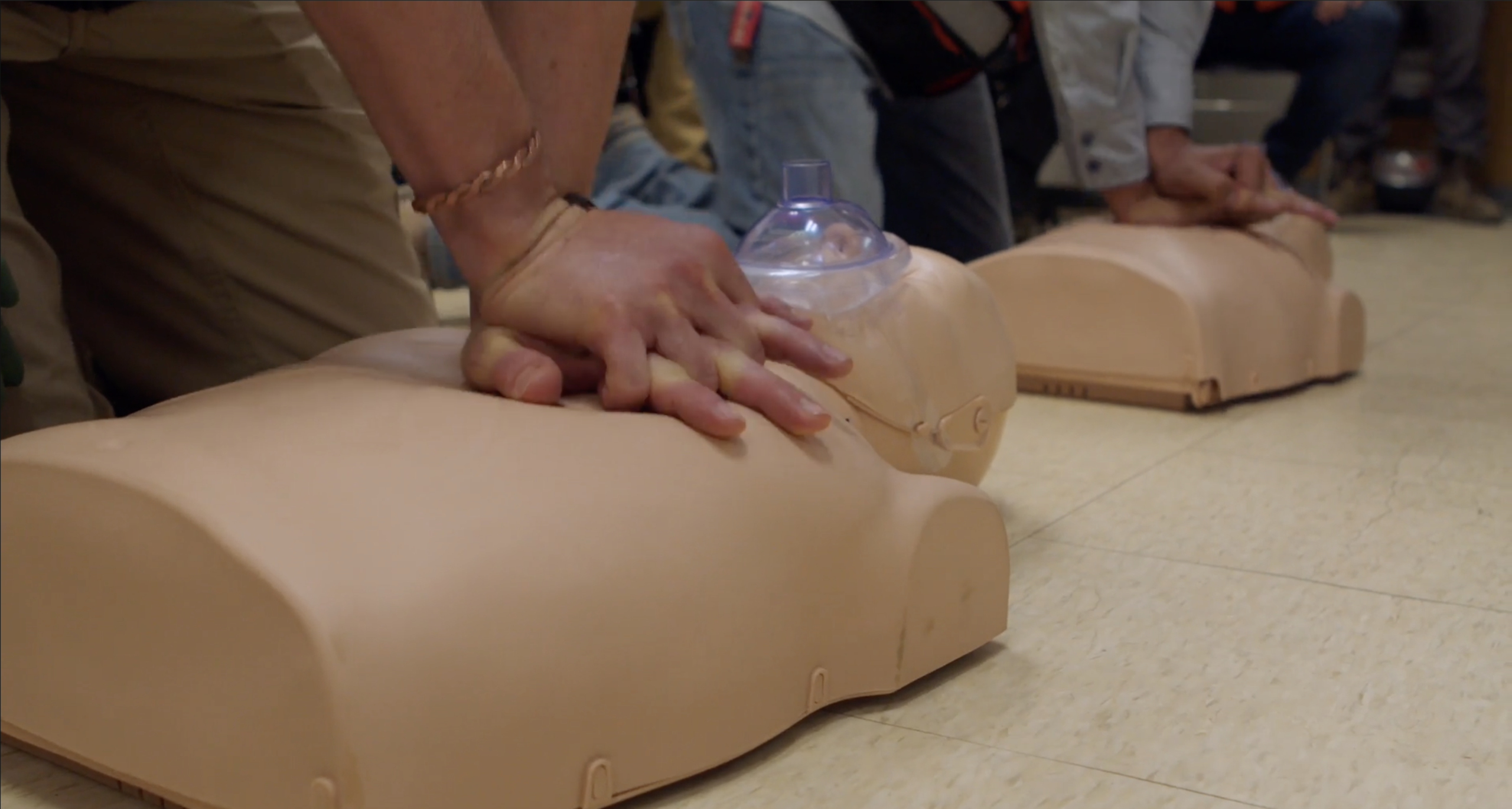
- CPR using current American Heart Association (AHA) or equivalent nationally recognized guidelines, including hands-only CPR
- AED operation and hands-on instruction
- Bleeding control, wound management, and burn treatment
- Heat- and cold-related emergency response
- Choking response and basic fracture management
- Guidance on maintaining current certifications and training records
Where Construction Sites Fall Short
Most first aid compliance failures come down to documentation gaps and maintenance issues, not intent. OSHA most frequently cites sites for:
- First aid kits are not inspected or restocked weekly
- No certified first aider present during all active shifts
- Lapsed training certifications not renewed on schedule
- AEDs are not maintained or positioned too far from work areas
- Missing or poorly located emergency communication plans
- No documented medical emergency provisions before the project started
Put the Right Coverage in Place
First Response Health & Safety provides on-site EMTs, paramedics, and nurses nationwide. We support construction sites, industrial facilities, and mission-critical environments. Our services include emergency response, post-incident assessments, and return-to-work evaluations.
We also provide full EMS coordination. First Response provides AHA-certified training for crews of any size. We teach CPR, AED use, and first aid. We bring the training directly to your site.
Related Posts